 December 7, 2025: May God’s words be spoken, may God’s words be heard. Amen.
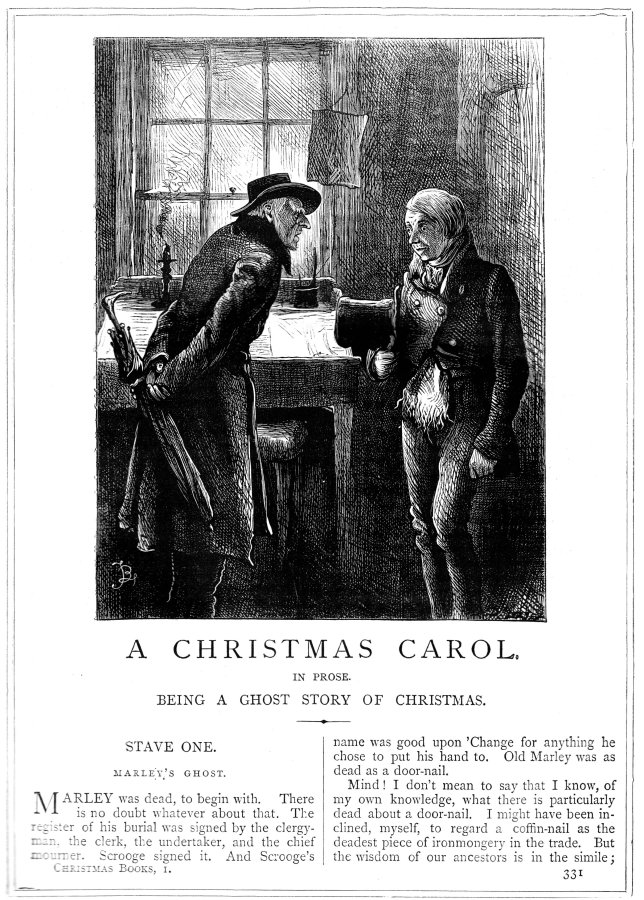
You’all know I love Hallmark Christmas movies. However, there is nothing quite like the ultimate story we hear at this time of year – A Christmas Carol, by Charles Dickens. And as much as I love Hallmark, they just do not compare in their remakes of that classic, to the ones that star Alister Sims or Sir Patrick Stewart.
Now, we are in Advent, not Christmas, so why do I bring this classic tale of Christmas up? For the same reason I did many years ago when I was preaching on the texts for this Sunday – especially the one from Isaiah, because Dickens knew how to create a setting. And, the truth is, while the movie adaptations are good, nothing is better than the actual book in telling that important part of the story. I mean, isn’t that nearly always the case – Lord of the Rings trilogy, Dune, the Chronicles of Narnia – I know, I am showing my fantasy/scifi side. Even the Harry Potter movies, while really good, were not as good as the books. The same is very true for A Christmas Carol.
The opening paragraph of this Dicken’s seasonal classic makes one thing absolutely clear. It reads, “Marley was dead: to begin with. There is no doubt whatever about that. The register of his burial was signed by the clergyman, the clerk, the undertaker, and the chief mourner. Scrooge signed it: and Scrooge’s name was good upon ’Change, for anything he chose to put his hand to. Old Marley was as dead as a door-nail. Mind! I don’t mean to say that I know, of my own knowledge, what there is particularly dead about a door-nail. I might have been inclined, myself, to regard a coffin-nail as the deadest piece of ironmongery in the trade. But the wisdom of our ancestors is in the simile; and my unhallowed hands shall not disturb it, or the Country’s done for. You will therefore permit me to repeat, emphatically, that Marley was as dead as a door-nail.”
So, I guess Marley, old Scrooge’s business partner, was very much dead? Or, as we get from the coronor in The Wizard of Oz – Marley is “…not only merely dead, [he’s] really most sincerely dead.” Clearly we do not need to ask, in our best Monty Python voice, “Is he dead yet?” Marley is dead. Got it. But why all the fuss – why all the repetition?
Well, as we continue in the story we realize that if we weren’t quite sure about Marley being dead, than it throws off the basis for the very strange set of Christmas Eve visitations that result in a miracle of new life for Scrooge. And it is this new life that is an important part of our Advent journey. The life that grows out of death.
Now you might be thinking, isn’t that Easter, not Advent? Well, it is both, as will see in the passage from Isaiah, and also from St. Paul in his letter to the Romans (who quotes the very scripture in Isaiah we heard today).
The passage begins with this: “A shoot shall come out from the stump of Jesse, and a branch shall grow out of his roots.” That branch, the passage continues, is the birth of a new leader – one who is righteous and faithful, who has compassion for the poor and the meek. Oh, how we yearn even today, for that.
Now we often hear these words and think of Jesus, but Jews then and to today know these words as applying to King Hezekiah of Judah. Still, everyone all over the world yearn for this type of leader – one who has compassion for her people, and knows they are not God, but are there to serve God’s people. The prophet’s words remind all of us what is expected of those that lead the people of God. And it is a proper metaphor for the incarnation too.
So, let’s get back to that stump, that leftover remains of a very dead tree. A tree that, as Dickins would likely say, is as dead as a door nail. Why is this imagery so important to the people then, or us now?
Well, remember last week? The prophet was speaking of a vision of a new world where swords would be turned into plowshares? Well, that hasn’t come about yet. The Assyrians were still a threat to Jerusalem, and had destroyed many a city in Judah and Israel. In fact, in the chapter before the one we read from today, we hear about those rulers who oppress the people, turning aside the needy from justice, and robbing the poor and vulnerable. It was a time of darkness for the people, where hope was far gone and everyone seemed like the walking dead.
The stump is a metaphor for the people who felt dead inside. The shoot is the birth of a new leader who is righteous, faithful, and good. That would be a miracle to those so worn down by the reality in which they lived. But the passage doesn’t stop there. This new life is beyond anything anyone has ever experienced – beyond even swords being made into plowshares. It is what we have come to call the peaceable kingdom…where “The wolf shall live with the lamb, the leopard shall lie down with the kid…”
Of course, this image has been depicted in religious art, and is the stuff of poets. But given the circumstances then and today, many of us might say, “The wolf might lie down with the lamb. But the lamb won’t get much sleep!” We greet these words with a big “Bah Humbug!’ Not because we don’t want it – oh we so dream it could be true. No, we are skeptical because we have become so used to the very unpeaceable kingdom – war, violence, human trafficking, hate crimes, cyberbullying, and leaders who attack the people they are meant to serve, not to mention difficult times in our own lives. We can feel devoid of dreams like this because it can all seem too big to imagine – this time of peace and love for all. It seems like a pipe dream.
We can be so very weary from what life throws at us that we become like those people long ago – the walking dead. Our faith withered so much that we keep a watchful eye, a bit like a lamb near a lion, for what might next prey upon us, and not for miracles of new life.
And so this prophetic witness of Isaiah is not only meant for those long ago, but for us too. Maybe that is why St. Paul quotes the prophet in his letter to the Romans we heard a part of today. He writes “Whatever was written in former days was written for our instruction, so that by steadfastness and by the encouragement of the scriptures we might have hope….and again Isaiah says, “The root of Jesse shall come, the one who rises to rule the Gentiles; in him the Gentiles shall hope.””
St. Paul is reminding the people in Rome, and now us, of the promise of Isaiah – that new life grows out of what seems to be very much dead, bringing hope to all. And folks, as I said last week, hope is a most powerful force amidst the darkness of the world. It is the stuff of transformation, and the heart of Advent. Hope is the spark in the soul that can defeat the darkness, can overcome the strongest enemies, can make dreams – God’s or our own – possible. And hope is the root of joy.
Now, to be clear, joy is not happiness. Joy is not connected to external events. Joy is the inner peace we carry knowing that no matter what life throws at us, God loves us – loves us enough to break into the darkness of our lives with the birth of Christ Jesus.
But here’s the thing. This new vision of the world – this peaceable kingdom and life out of death – this hope and joy – well, we have a role to play in bringing it all about. St. Paul adds this instruction we heard today “Welcome one another, therefore, just as Christ has welcomed you.” This welcome isn’t a polite greeting like we do at the peace, or we might when being introduced at a party. That is far too tame. The Greek used here is more on the lines of “fully embrace.” And it isn’t meant just for people we know well, or even like. It is to fully embrace like Christ! Or to put it in Christ’s own words “love one another as I loved you.”
We are to be the counter-cultural witness to the goodness of God in how we treat one another, how we treat those who are different than ourselves, how we treat all of creation. When we love as Christ loved us, we become the very sprouts of new life for a world that feels dead as a stump. That is how we, by his incarnation in our heart, give birth to God’s vision of love and peace. It happens one welcome – one full embrace – one moment of unconditional love at a time. It is the hope of nations, and the promise of the child we await.
Think about the story of old Scrooge for a moment. His transformation didn’t come about because he got frightened out of his wits by a bunch of ghosts. It started with a warning from Marley, to be sure, but what exactly was Marley telling him?
First, he told Scrooge that the chain he was wearing he forged in life, and that Scrooge’s was just as long and growing ever still. And when Scrooge said, “But you were always a good man of business, Jacob,” Marley shouted back – “Business!” “Mankind was my business. The common welfare was my business; charity, mercy, forbearance, and benevolence, were all my business. The dealings of my trade were but a drop of water in the comprehensive ocean of my business!…At this time of the rolling year, I suffer most. Why did I walk through crowds of fellow-beings with my eyes turned down, and never raise them to that blessed Star which led the Wise Men to a poor abode? Were there no poor homes to which its light would have conducted me?”
Then the Ghosts of Christmas Past, Present, and Future arrive one by one. What did they show Scrooge? Images of hell to scare him? No. They showed him love – love he once had for another person, love of the Cratchit family even amidst all their lot, love his nephew showed to him despite Scrooge’s nasty clapbacks at him. And the reader or viewer sees how the absence of love from others can deaden many a child of God.
That is what the Spirits showed to Scrooge – love. Love not based on being treated well, love not based on the circumstances of life. Just love – that full embrace St. Paul implores us to give – that commandment of Jesus to us all. It is the very thing that will bring forth the shoot of hope and joy from even the deadest of souls, including our own.
So next time you are watching your favorite version of A Christmas Carol, remember this passage from Isaiah and the epistle of St. Paul to the Romans. Remember and see that even a soul as dead as Dickin’s Mr. Scrooge may be given new life through the power of love. Remember too that this miracle of redemptive grace is for everyone – for you and for me. It is the hope that will heal the world and bring about the beloved kingdom for us all, so long as we do our part to bring it about.
And so I leave you with this, the two benedictions St. Paul includes in this part of his epistle. Maybe they be something you can say each morning as you start the day – a reminder of Advent and what is possible by God’s grace, when we share with others our hope and joy in love.
“May the God of steadfastness and encouragement grant you to live in harmony with one another, in accordance with Christ Jesus, so that together you may with one voice glorify the God and Father of our Lord Jesus Christ.
May the God of hope fill you with all joy and peace in believing, so that you may abound in hope by the power of the Holy Spirit.”
Amen.
For the audio, click below, or subscribe to our iTunes Sermon Podcast by clicking here (also available on Audible):
The Rev. Diana L. Wilcox
Christ Church in Bloomfield & Glen Ridge
December 7, 2025
Advent 4 – Year A
1st Reading – Isaiah 11:1-10
2nd Reading – Romans 15:4-13
Gospel – Matthew 3:1-12