 November 1, 2026 – The Feast of All Saints: May God’s words be spoken, may God’s words be heard. Amen.
Now, you’all know I grew up Baptist, and one of the reasons I like to watch Morning Joe during the week is because of the host – Joe Scarborough. Joe, a former Republican Congressman, often talks about Jesus, religion, and his Baptist roots. One of my fav themes he often brings up is how to be persistent – like he would say “we’d sing 17 verses of ‘Just As I Am’ if that is what it took to get someone to profess their faith…” And…well, that is very true!
Anyway, the other day I just about spewed my coffee all over the room because John Meachem, a renowned historian and Episcopalian, was one of the guests. And here is what happened.
John Meachem said to Joe, “…you do have an Episcopalian connection even though you try to bury it.”
Joe replied, “I do. We would go to the Baptist Church. My mom would play the organ at the Episcopal Church because she said ‘Baptists didn’t appreciate good music.’…”
So true, my friends. There is nothing like the Episcopal Church for experiencing fabulous sacred music, and today is one of those high holy days that feature some of the best music of the church, because today we celebrate the Feast of All Saints – on it’s actual day too!
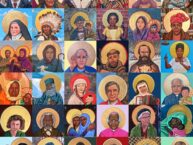
That is where we get All Hallow’s Eve – or All Holy Eve – Halloween – which is the night before All Saints. All Saints is a time when we remember the saints who lived before, and live on with us still. No, not saints as in they led perfect lives, or just those big saints the church commemorates on certain days of the year. No, today we remember the saints that have shaped our lives, our faith, our church. The ones who lived their faith as best they could – looking to love and serve Christ in the world.
And on All Saints, in Year A, we get the Beatitudes from the Gospel of Matthew, which opens what is commonly known as The Sermon on the Mount. And folks, that is a very good thing indeed, especially on this particular Sunday, in this particular country. In two days, on Tuesday, November 3rd, voting in the midterm elections will finally come to an end when polls close across the country. It is a monumental moment in an extraordinarily trying time in our nation, and the path to it has been filled with some of the most vile bigotry and viciousness fueled by the excesses of money and power that this country has ever seen. It is part of the deep divide we face every day of political left and right, red vs. blue. And perhaps even more troubling, the widening chasm of rich vs. poor. Strangely enough, it is that last one, the economically up vs. down divide, that may at last bring the left and the right together. We shall see.
So, what has that to do with us as followers of Jesus?
Well, Jesus tells us in the beatitudes when he says: “Blessed are the peacemakers, for they will be called children of God.”
Now notice…Jesus didn’t say “Blessed are those who agree with one another.” He didn’t say “Blessed are those who are all alike – who vote alike, look alike, love alike, think alike, speak alike, or pray alike.” He said, “Blessed are the peacemakers.”
This is the gospel, the good news, we need to remember today, folks, because Jesus is telling us that we are called for such a time as this. We are beatitude people, the peacemakers, the children of God, and we need to live that out every single day, especially in this crazy and divisive time.
Now, getting back to Joe Scarborough a moment, he can sometimes be annoying – talking over people – it’s his schtick, I get it. But one thing that he does is he openly – on TV, with censors and all of that to deal with – he talks about Jesus, his faith, and, as he puts it “the red letters.” That last bit is Baptist talk for those bibles where everything Jesus says is in red letters, and he usually says this when some politician is spewing hate in the name of Christianity.
The thing is, most people don’t do that. Most people don’t mention their faith when they go about their day after leaving church on Sundays. Most people don’t use the pulpit they have – which is wherever they are – to proclaim the gospel. But, we sure do need too, and need to – often and everywhere. Because there are other folks who are using the gospel, using Jesus, for hate, for political gain, for power. We are called to stand against this heretical use of our faith, and make it absolutely clear in every way we can that Jesus did not preach hate, but love. And Jesus did not preach division, but called us – his followers – Peacemakers.
Now, that may sound like we are supposed to just shut up to “keep the peace.”
Oh hell no!
Being a peacemaker – the kind Jesus calls us to be – isn’t a thing for those who want to sit on the sidelines, or for those who want to quiet the noise without changing what is creating it in the first place.
We are the ones who hunger and thirst for righteousness – Peacemakers – the children of God – and we will not be silent to keep the peace.
We are the peacemakers who do not make peace with hate, but overcome it with love.
The peacemakers who do not make peace with power, but lift up the voices of those without it, to bridge the divide.
The peacemakers who do not make peace with war or violence, but are repairers of the breach that communities and nations.
The peacemakers who are not satisfied simply by coming to church on Sunday, but by our hunger and thirst for righteousness, will bring about the beloved kingdom of God where all are be filled, and peace reigns between former foes.
And we Peacemakers, if we have not done so already, will get our Souls To The Polls on Tuesday to make our voices heard because there is too much at stake to stay on the sidelines.
But that is not when we end our work. No, we will be most needed in the time following November 3rd. For no matter the outcome, divisions will persist, and we will need to continue to be the ones to build bridges across divides, to be repairers of the breach, to be peacemakers who help the country heal.
This is the work of saints, the ones who came before, and all of us now. And while not yet in the church’s calendar of saints (but I believe will one day be), I want to lift up today the life of one particular saint who understood what being a peacemaker, being a follower of Jesus, was all about. This saint is the late John Lewis.
Now most of us know a bit about Congressman Lewis, but perhaps we don’t know much beyond his call to engage in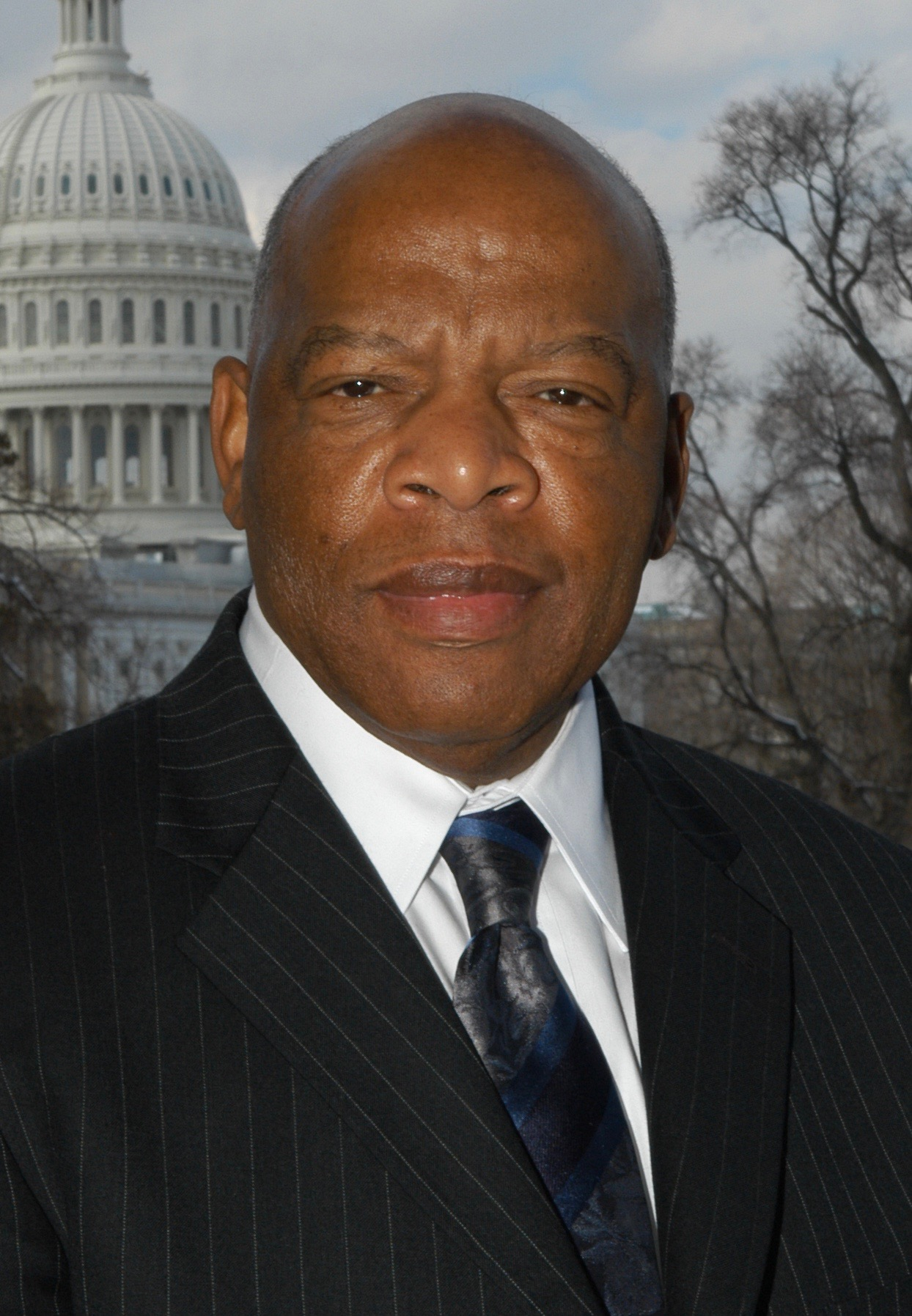 “Good Trouble.” But we need to, because his wasn’t a political story any more than was the case for the Rev. Dr. Martin Luther King, Jr. It was a life that came from his faith – his belief in the gospel of Jesus Christ.
“John Lewis was born on February 21, 1940, in Troy, Alabama, one of 10 children of Eddie and Willie Mae Lewis. To escape the exploitative system of sharecropping prevalent across the South, his parents saved enough money to purchase a 110-acre farm to grow cotton, corn, and peanuts. To help make ends meet, Lewis’ father also drove a school bus, and his mother was a domestic worker.
John Lewis attended segregated public schools in Alabama, and as a boy he felt called to ministry, aspiring to emulate the career of [the Rev.] Dr. Martin Luther King Jr. after hearing him speak on the radio. …[He went to American Baptist Theological seminary and then on to Fisk University earning degrees in religion and philosophy.]
Before his 21st birthday, Lewis had taken on a central role in the… civil rights movement. He embraced King’s philosophy of nonviolent resistance and as a college student participated in sit-in protests to desegregate lunch counters in Nashville in the spring of 1960. Lewis was a founder and chairman of the Student Nonviolent Coordinating Committee (SNCC). In 1961, he endured brutal physical beatings and a lengthy arrest as one of 13 participants in the first Freedom Rides, organized by the Congress of Racial Equality to desegregate interstate commercial busing in the South. Lewis’s fearless commitment to peaceful protest resulted in more than 40 arrests between 1960 and 1966.
In 1963, Lewis helped plan the iconic March on Washington for Jobs and Freedom. In the buildup to the event, Lewis, King, labor leader A. Philip Randolph, activist Bayard Rustin, and other march organizers were accused by powerful segregationists like Senator Strom Thurmond of South Carolina of having ties to the Communist Party. [by the way – have you ever noticed how often those who follow Jesus are called communists whenever we actually try to do as he commanded? – ya know, help the poor, care for the sick and imprisoned, welcome the immigrant…]
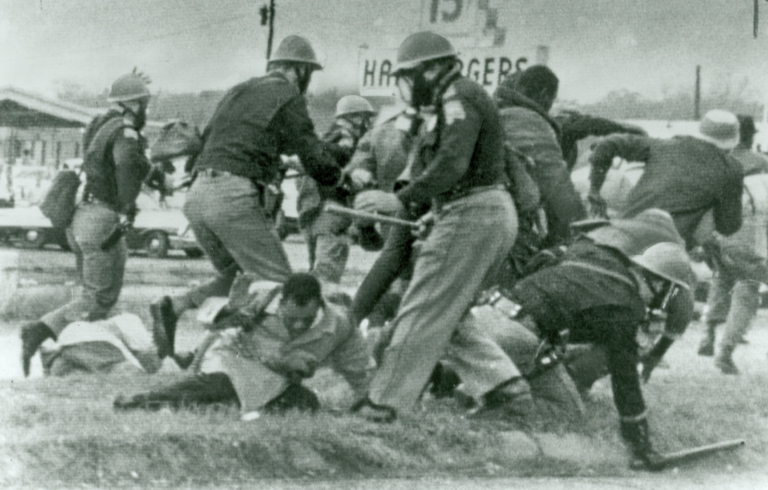
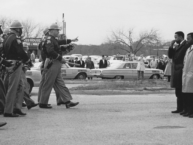
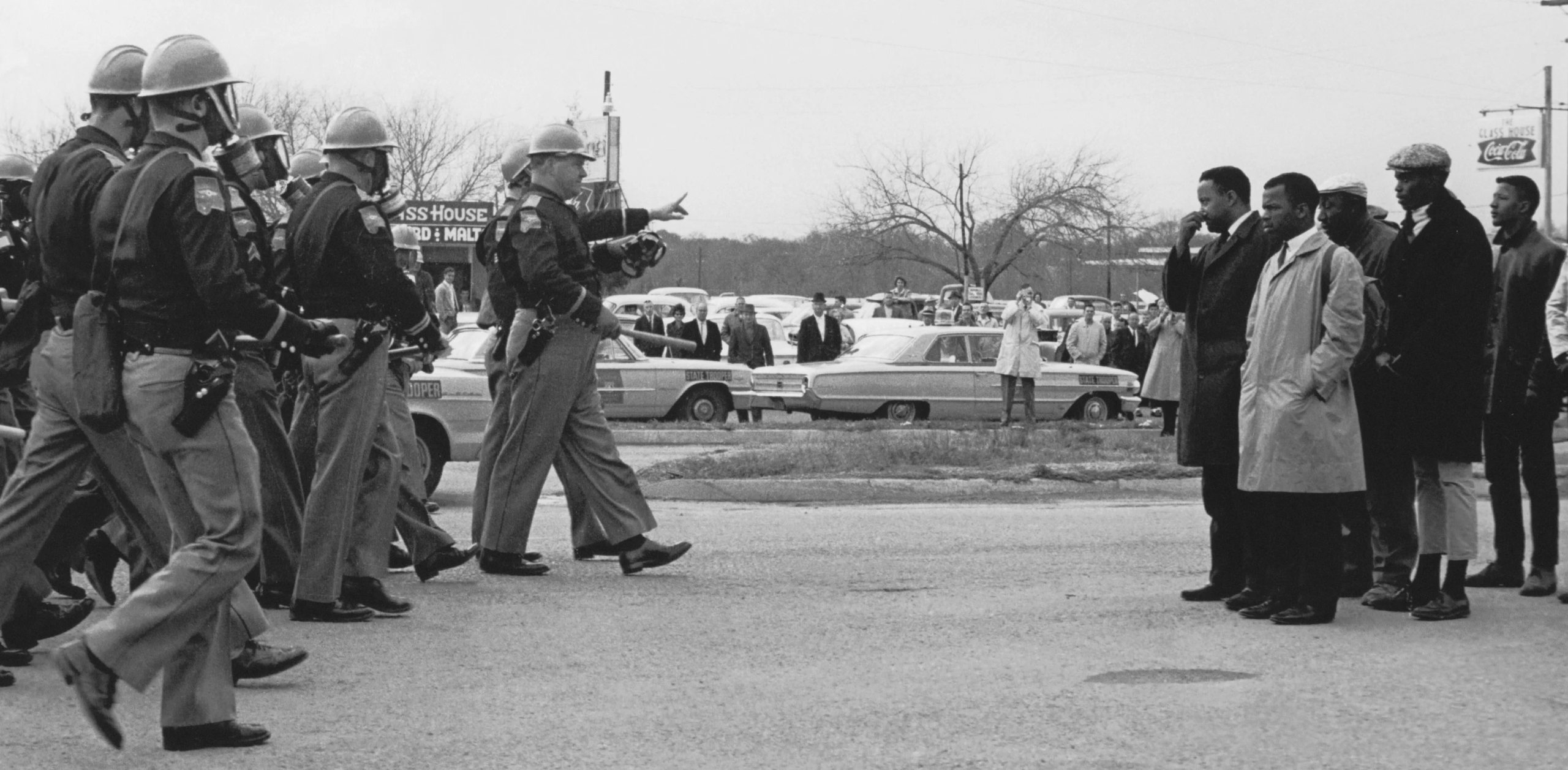
John Lewis (on ground in front) being beaten by police after crossing the Edmund Pettis Bridge in support of voting rights.
Anyway, back to John Lewis: In 1964, as part of the Freedom Summer campaign in Mississippi, Lewis braved constant threats and violence to lead a voter registration drive and peaceful protests against segregation. …In early 1965 he embarked on a new voter registration drive in Selma. On Sunday, March 7, Lewis and hundreds of others began a march to the state capital in Montgomery to raise awareness of voter suppression. As the group crossed the Edmund Pettus Bridge over the Alabama River, baton-wielding state troopers descended on the peaceful marchers, beating and tear-gassing them. Photos of local law enforcement attacking Lewis with a club circulated throughout the nation. Lewis, who suffered a fractured skull on what became known as “Bloody Sunday,” called for the federal government to protect protestors.
The appalling brutality against peaceful demonstrators in Selma served as the catalyst for congressional action on voting rights, [and]…six months later, in early August, Lewis attended a ceremony at the White House to watch as President Johnson signed the Voting Rights Act of 1965.
John Lewis remained an activist during his [long] career on Capitol Hill, [and] in 1995, almost a decade into his House career, Lewis offered a personal reflection on the convictions that guided his actions and defined his life. “What am I? I am a man who deeply believes in compassion and hope,” Lewis wrote. “A man who believes we can move beyond the anger, hatred and attacks that have assaulted our nation’s psyche. A man who, day after day, struggles to build the bridges that will allow us all to come together in Dr. King’s beloved community.”[1]
A beloved community, that the Rev. Dr. Martin Luther King, Jr. would have noted, was the very vision of God.
John Lewis was a Peacemaker who worked to bridge the divide of hate wrought by racism through his faith driven willingness to engage in Good Trouble.
As Lewis’ life attests, being a disciple of Jesus, living this beatitude life, in this time and place will not be easy, but it is rewarding. For when we see those who thirst for hunger and righteousness filled, when we witness people coming together across the bridges we have built, we will feel most like the children of God that we truly are. We will know we are blessed.
And to sustain us in the journey, we come here to be reminded that we do not do this alone. We have the communion of saints, who are never far from us – saints like John Lewis. And like all of them, we have our rock – Christ Jesus – who will sustain us.
For his light will overcome any darkness.
His love is more powerful than any hate.
His resurrection defeated for all time the power of death.
As part of our Stewardship Campaign, you will receive a gift blessed at the altar. Today it is a small rock with the word Peace on it. You can put it on your pocket, or some other place where you will see it every day.
Let it be a reminder to you that you are a Peacemaker – one called to build bridges across divides though the healing power of love.
Let it be a reminder to you of this parish – and of all the saints who have come before who made this place, where you are spiritually nourished, possible.
Let it be a reminder to you that you are a saint, one who hungers and thirsts for righteousness, a child of God.
Let it be a reminder that your rock, your foundation, is Christ Jesus, who calls you Blessed.
And finally, let it be a reminder of John Lewis, and propel you to get into some “Good trouble” as you make possible God’s peaceable kingdom here on earth.
Amen.
For the audio, click below, or subscribe to our iTunes Sermon Podcast by clicking here (also available on Audible):
[1] https://history.house.gov/People/Detail/16948
The Rev. Diana L. Wilcox
Christ Church in Bloomfield & Glen Ridge
November 1, 2026
All Saints Sunday
1st Reading – Revelation 7:9-17
2nd Reading – 1 John 3:1-3
Gospel – Matthew 5:1-12