 February 8, 226: May God’s words be spoken, may God’s words be heard. Amen.
You know, when I left Minneapolis and the -35 windchill weather, I did NOT remember packing that cold air to bring back to New Jersey. Lordy! I had hoped to leave that behind, but it is smacking us in the face now, isn’t it? I am glad to be inside this time, rather than out in it for hours marching down the street. I am also grateful to those of you who ventured out into this insane cold to be here this morning. Perhaps we all have a better appreciation for the people of Minneapolis and all they do in weather colder than this.
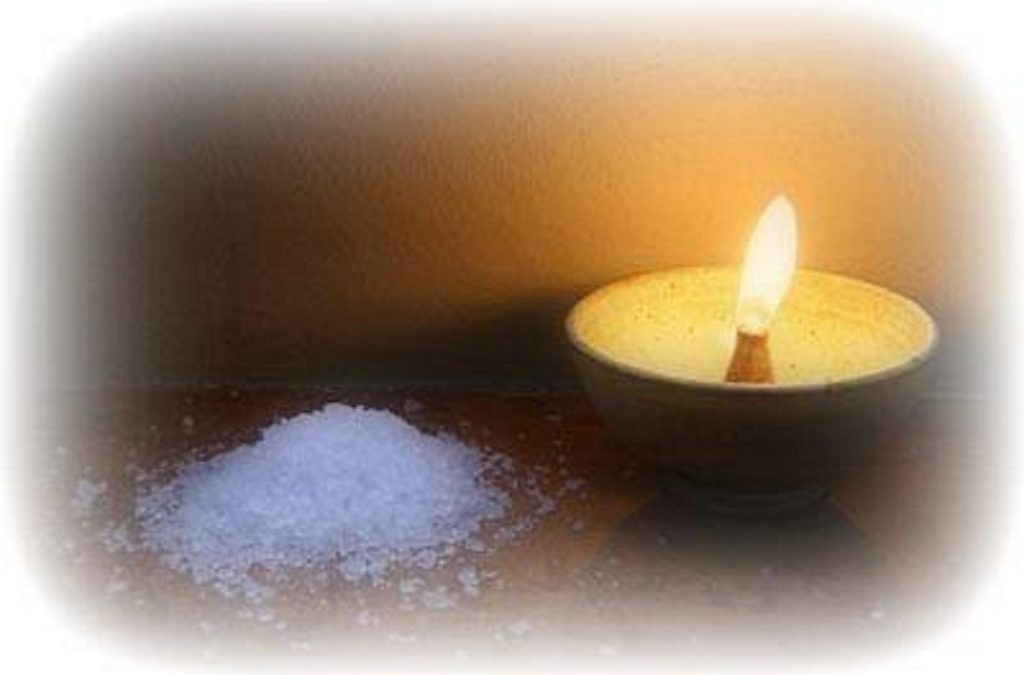
So, given all the ice that is around these days, on the sidewalks and armed in the street of our cities, I was glad to hear the texts for today. In the gospel we are hearing part of the sermon on the mount. After the familiar “Blessed are those…” statements we call the beatitudes, Jesus then says “You are the salt of the earth; but if salt has lost its taste, how can its saltiness be restored? It is no longer good for anything, but is thrown out and trampled under foot.
“You are the light of the world. A city built on a hill cannot be hid. No one after lighting a lamp puts it under the bushel basket, but on the lampstand, and it gives light to all in the house.”
“You are the salt of the earth.”
“You are the light of the world.”
Well, that’s good news – considering both will melt ice (come to think of it – maybe that is an appropriate acronym then for that armed band of hate enforcers – it shows just how vulnerable they really are).
But here’s the thing about this proclamation of Jesus…he isn’tinviting us to those things. He is telling us that we already ARE those things. This isn’t a choice folks. We are salt. We are light.
Then he offers absurd comments about salt losing its saltiness and hiding a light under a bushel basket. Jesus did have a sense of humor, and clearly his sarcasm is showing here, because salt cannot lose its saltiness, and no one would put a basket over an open flame, which is what a light would be in those days. Both scenarios are ridiculous, but then again, Jesus wasn’t trying to offer a science or fire safety lesson. He is preaching and being a bit cheeky to make a point, as he sometimes does.
So, what was Jesus trying to tell his followers – then and now?
I am reminded of two sayings by the Buddha: “Three things cannot be long hidden: the sun, the moon, and the truth.” And, “There are only two mistakes one can make along the road to truth; not going all the way, and not starting.”
Some have suggested that Jesus studied Buddhist principles in India during his early adult life, but whether he did or he didn’t, he is certainly preaching them here. He wants humanity to understand a fundamental truth – our very essence – in the hope that we will honor that truth within ourselves, allowing God to shine in us and through us. We can turn away, we can forget, we can get lost…but the truth of who we are cannot be hidden – not to God anyway. And, as the Buddha says, the path to understanding that truth is only impossible if we don’t try, or we stop trying.
But still, what does it mean for us to live this truth – what does that look like in our lives? Well, maybe we need to think about what salt and light do, particularly for those in the time of Jesus, to understand how important it is for us to be what we were born to be.
The thing is, we are so far removed from what these things would have meant to the people in the Ancient Near East, that the meaning of Christ’s metaphor may be lost to us. We have refrigeration and electricity. But they did not.
Salt was a way to preserve the life of meat and fish, and to enhance its flavor, and it was used in health regimens. It was so important to them that Roman soldiers were sometimes paid with salt – hence the word we use today – salary – sal being the Latin for salt.
And light – well, in these dark days of winter, even with our electricity, we can understand the value of that, but imagine living where there is no electric light. It is hard for us now, but if you think about it – in the long history of the world, there has been less than 150 years of light bulbs. In the time of Jesus, and up until 1880, there was the sun, and then there were oil lamps, candles, fires, moonlight, and torches for the night. Light then and now makes it possible to see dangers in the night, to keep warm, and to thrive, and without the light of the sun, life would be impossible.
Jesus is telling us that we can enhance and preserve life and overcome darkness for the world. But note – not for ourselves alone. Salt’s very purpose is to enhance or preserve life. The purpose of light isn’t to shine for itself, but to illuminate other things, to dispel the darkness.
If we are the salt of the earth, and the light of the world – and we are – then what does that mean in practical terms for us now? We get that answer in the passage from Isaiah we heard earlier.
First, we need to understand the setting: The powerful elite who benefited from the oppression of others believes its pious rituals of fasting will please God. But God tells them that there is only one fast that is righteous – the one that comes from a place of empathy and compassion, not haughtiness and privilege. In words we will hear again on Ash Wednesday, God makes it clear that only a fast from oppression by loosening the bonds of injustice, and freeing the captives, is what we are to offer. Only a fast from abundance by caring and feeding the poor and the hungry, will be acceptable to God. Notice then, that the acts God wants from us are not ones that draw attention to ourselves, or are miraculous feats, but are ones that serve others.
The truth that Jesus is asking us to see is that we are the salt that will give life to those who have been pushed to the brink of death. We are the light that will overcome the darkness of hate and division. We live this truth when we offer the fasts God chooses – compassion, mercy, grace, and love in whatever small way we can. Or, as our own Anglican archbishop, the late Most Rev. Desmond Tutu, put it “Do your little bit of good where you are; it’s those little bits of good put together that overwhelm the world.”
And so that brings me to the Olympics. How many of you watched the Opening Ceremony of the Winter Games Friday? It was wonderful. But there was a message there too that we need to consider today.
The theme of this Olympiad is Armonia, meaning Harmony, and of course – the parade of athletes is always one of the best parts. But this Olympiad’s opening ceremonies had a message for the world too.
Sure, like all them, it celebrated the beauty and gift of the host country’s culture, in this case, Italy, but far more was going on this time. It was essentially a colorful display of diversity, and the hope for harmony in a world filled with conflict and division.
From red, yellow, and blue paint seemingly pouring down onto the platform from 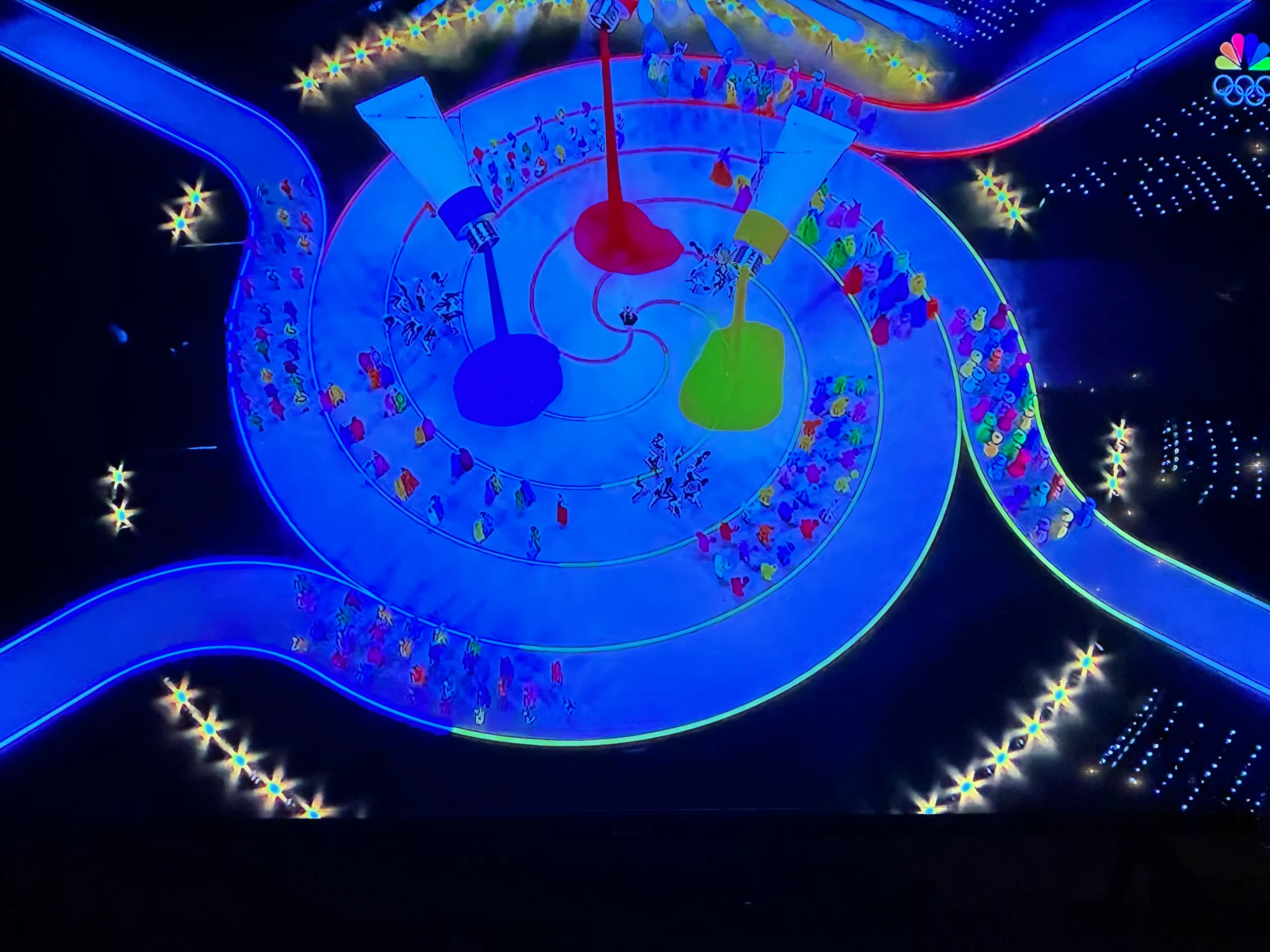 enormous suspended paint tubes, to multi-colored swirls of people dancing across the platform, the message of harmony amid difference was hard to miss. But it was the speech of Kirsty Coventry, a seven-time Olympic swimming medalist, and the 10th President of the International Olympic Committee, given just before the lighting of the Olympic flame, that I think offered the world a good definition of what it means to be the salt of the earth and the light of the world, even if that was not her intent.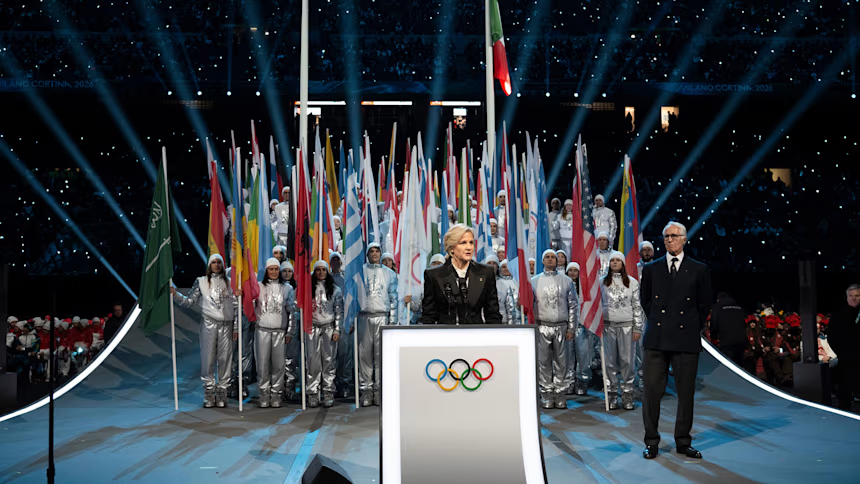
Speaking first to the athletes, Ms. Coventry said “Over the next two weeks, you’re going to give us something truly special. You’ll show us what it means to be human. To dream. To overcome. To respect one another. To care for each other. You’ll show us that strength isn’t just about winning – it’s about courage, empathy and heart. You will not only make incredible memories. You will reach your Olympic dreams – and you will show the world how to live.
This is why we all love the Olympic Games. Because through you, we see the very best of ourselves. You remind us that we can be brave. That we can be kind. And that we can get back up, no matter how hard we fall.”
Then she addressed everyone, saying “And to everyone watching, here in Italy and around the world – thank you for joining this moment. Thank you for believing in the magic of the Olympic Games.
When we see an athlete stumble and find the strength to rise, we are reminded that we can do the same. When we see rivals embrace at the end of a finish line, we are reminded that we can choose respect. When we see grace, courage and friendship – we remember the kind of people we all want to be. The spirit of the Olympic Games is about so much more than sport. It is about us – and what makes us human.
In Africa, where I’m from, we have a word: ubuntu. It means: I am because we are. That we can only rise by lifting others. That our strength comes from caring for each other. No matter where you come from, we all know this spirit – it lives and breathes in every community.
I see this spirit most clearly at the Olympic Games. Here, athletes from every corner of our world compete fiercely – but also respect, support and inspire one another. They remind us that we are all connected, that our strength comes from how we treat each other, and that the best of humanity is found in courage, compassion and kindness.”
Coventry was telling everyone that the very things the athletes embody at the games are examples for all of us. Jesus might call their example being salt and light. God might say “Yup – do that!” I just want her to come preach here some Sunday.
Now, in the audience that night was the US Vice-President, and watching were millions across our nation. I can only hope that her message, and that of these games, sinks deep into their hearts, because clearly the scriptures they claim to believe in have not. But, whether or not that happens, she is right, we all can take a lesson from those athletes, especially followers of Jesus, because it is a model for our lives in Christ.
Of courses, when we watch these games, and see the competitors fly through the air, twisting and turning, speeding down icy tracks, or spinning effortlessly on ice, we should remember – that isn’t what God is asking of you. Remember the passage from Isaiah – it isn’t the great feats, but the compassion, kindness, and respect they share that we are to model. Each of us will be salt and light in the way God has gifted us to be, so long as we model that.
Remember too that every athlete at those games started as a small child of God with a calling. To be where they are today, they had to make a small start. The skier had to put on a pair of skis and be willing to go down the bunny slope for the first time. The skater had to strap on skates and put their feet on the ice. And, to get where they are today, they had to train constantly, get up after they fell or failed, and get back out there to live their truth. It is as the Buddha said: “There are only two mistakes one can make along the road to truth; not going all the way, and not starting.” We have to start, and then we have to keep going, even if we fall.
And there is more to what we can learn from these athletes to help us in our own quest to do what we are called to do. One of the sponsors of the Olympics is a mattress company. And in the ads, the athletes remind viewers that rest isn’t a break from training – it is a part of their training. Without it, they would break and never make it. The same is true for us who are salt and light. We too need rest from our training, our continued work in the world. And we get that renewal here at this table, and among the fellowship we find here in Christ.
So, today we rest.
Tomorrow we do what those athletes do – show the world what is possible when we are strong enough for empathy and courageous enough for love.
You are the salt of the earth.
You are the light of the world.
There is no one who can keep you from that truth but yourself, and there is no time that truth is needed more than now.
Amen.
For the audio, click below, or subscribe to our iTunes Sermon Podcast by clicking here (also available on Audible):
The Rev. Diana L. Wilcox
Christ Episcopal Church in Bloomfield & Glen Ridge
February 8, 2026
Fifth Sunday After The Epiphany – Year A
First Reading – Isaiah 58:1-9a, (9b-12)
Second Reading – 1 Corinthians 2:1-12, (13-16)
Gospel – Matthew 5:13-20