 March 22, 2025: May God’s words be spoken, may God’s words be heard. Amen.
These are troubling times for us all – the world, our country, our communities, and our families. We are at war with Iran, and at war in our country. Violence and oppression, bitterness and anger are part of our daily lives. It is exhausting.
So, perhaps the stories today in Ezekiel and the Gospel of John are hitting a little too close to home – filled with death and dying, darkness and dust.
In Ezekiel, we get a tale that sounds like a Zombie movie. It is the story about God calling him to prophesy to a whole lot of old dry bones lying in a valley. He does, and they come alive. The bones, he is told, is a metaphor for the people of Israel – a message of hope that God will revive them from their spiritual death.
And in our gospel, we get the story of the raising of Lazarus, a man Jesus loved, and the brother of people dear to him – Mary and Martha. Jesus, the one who brings sight to the blind, who has healed many, who has fed thousands, is told that his friend Lazarus is dying. And yet, oddly enough, he decides to take his good sweet time getting to his bedside, so he arrives too late to prevent his death. Martha and Mary’s had been waiting in hope, and when help did not come, despaired for the loss of their brother. Jesus comes, reassures them, then weeps for his friend. And, after prayer, he calls Lazarus from the tomb, restoring his life.
Today, all of us likely feel both of these stories deeply. We understand Mary and Martha. In this time of so much death and destruction, we are grieving and in pain, angry at what is happening. We feel like Jesus weeping for who has been lost to us. But, perhaps most of all, we are also Lazarus, and the dry bones in the valley.
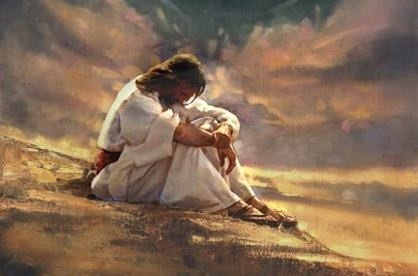
The truth is that for most of us, we know far too well the darkness and cold of the tomb of isolation, fear, oppression, loneliness, anxiety, and depression. We know what it feels like to be forgotten and pushed to the margins, lying dead and lost in that dry valley. We know the feeling of Martha and Martha – when it seems that God did not come for us when we were most in need. We see the valley of bones all around us.
We know grief, despair, and loss.
We know this as a community, of course, because we see people of color – immigrants and citizens – kidnapped off the street and “disappeared” by our government. This is something previously only heard of in autocratic countries, and we despair at the loss of our democratic principals.
We see our government buying up warehouses to store people – with building plans that look a lot like the slave ships of our horrific past – people crammed in by the thousands. Our government is actively trying to build concentration camps. We have not seen this since the days of the illegal and immoral imprisonment of Japanese Americans during WWII. We wonder – what ever happened to “never again?”
We lament the growing wealth gap as the rich are given tax breaks, while the rest of us are told to make do with less.
We mourn the women lost to birth complications, or imprisoned because they managed to find a compassionate doctor, in states that deny them needed healthcare.
We fear the loss of dignity and rights for already marginalized people in LGBTQ+ communities, for women, for anyone who isn’t white.
We weep at the destruction of the earth, God’s creation, and the endangerment of wildlife because of our greed, arrogance, abuse, and neglect.
And we are horrified by the rise of Christian Nationalism, which perverts the gospel of Jesus, and aligns itself instead with oppressive empire as it crucifies him in the streets, or imprisons him in concentration camps.
We, as a people, a nation, a world, know death, weariness, and emotional pain far too well.
But on a personal level, most of us know it too. If you have ever been at the bedside of someone who is dying, sat in the front pews at a funeral for a loved one, or been near death yourself, you know what it feels like to be worn to the bone, to be angry, to weep.
These are times of dry valleys and tombs, when hope often feels lost. And these texts today can really resonate with anyone who has ever experienced grief, and the emotional exhaustion of deep loss.
This past week, I was at two different funerals, and these texts were present in my mind and heart as I stood among grieving families and friends. I was struck especially by a particular moment in the gospel.
Jesus arrives after Lazarus has been dead for four days. Martha goes out to meet him and while she proclaims the truth of who Jesus is, that comes from a place, I believe, of frustration and anger. She tells him quite bluntly – “if you had been here, my brother wouldn’t have died.” If you have trouble understanding her pain, think about what you would feel if a doctor, hearing that your brother or sister were in cardiac arrest, decided not to rush to offer CPR, but instead stops by the local Starbucks and orders a cappuccino. When the doctor finally arrived, your sibling is dead. How would you respond to that doctor? I know that if it were me – that doctor would get an earful of my anger, frustration, grief, and disappointment.
So perhaps we can understand how Martha feels. Then Jesus does something we often see from well meaning people at funerals – he tries to console her with words about resurrection and life – trying to get her to see the larger picture. It’s like when someone says “well, at least he is no longer in pain,” or “she is with God in heaven,” as though that will somehow make it all better. It is true, but that isn’t really helpful. It comes out of a discomfort with grief and loss, and a desire to somehow make it all better. That is not the time for it.
So, Martha says “sure, I get that,” and then goes back to the house and tells Mary that Jesus has arrived. I suspect this scene was more like Martha went to Mary and said, “you deal with him.” Then we get this part – Jesus sees everyone’s grief – really sees it for the first time – and he wept too. What was that about? Didn’t he just tell Martha all that resurrection stuff that was supposed to make things easier? Doesn’t he know what he will next do? And that is when we realize Jesus’ fully human side emerged. And it isn’t only for the loss of his dear friend and the pain of those he loves.
Bethany, as it says in the text, is only 2 miles from Jerusalem. Already, we are told, there is great danger in him going anywhere near that city. Not only that, but he knew that what he was about to do with Lazarus, would endanger him even more, as news would spread everywhere, and he would be perceived even more of a threat to those in power. This moment – Lazarus being in the tomb – becomes for Jesus a vision of what lay ahead for him. He would soon no longer be able to be with these dear friends of his, or with his disciples, or with his own family. Sure, he knows that resurrection will happen, but for new life to emerge, he must first die and let go of things that are dear to him. His grief overwhelms him.
And, it needs to.
The thing is, grief is not something to avoid, or rush through. Sure, we don’t want to linger in it – it isn’t a fun place to be. But, it is a necessary journey – a part of the cost of love – of relationship – of being alive. That is why Holy Week – particularly the first two parts of the Triduum of Maundy Thursday & Good Friday – are critical to really experiencing Easter. You can’t have really know resurrection joy without first experiencing Good Friday grief.
There is also no wrong or right way to do it, nor do people walk through it at the same pace. A long time of grief is not a sign a person was closer to, or loved more, the one they lost. Nor is a short time of grief a sign of the opposite. But one thing is for sure – it is in these grief moments most of all that we truly experience God’s presence.
To be clear, this is NOT because God causes these deaths – spiritual, emotional, or physical. No, of course not. No one that loves deeply would ever intentionally do harm. As our former Presiding Bishop Michael Bruce Curry used to say “If it’s not about love, it’s not about God.“ So, God does not put us through trials, tests, or pain. I mean – seriously – how sick would that be? No, that is not why God’s presence is most felt in these times, such as we face now.
It is instead because God will always meet us there, in our darkest hour – when it seems that all hope has been lost. God will come for us and unbind us from our pain, and instill new life into our dry bones. God will do that because God loves us – just as we are, unconditionally, and for all time.
God.Loves.Us.
God.Loves.You!
For Lazarus, Martha, & Mary, for those old dry bones, and for each of you – God meets us where we are, and calls us to new life, because of that great love.
And God is with us now!
God is with us in our personal grief, but also in our grief as a community for all that is happening around us. Breathing new life into us. Calling us out of our tombs of despair.
And that, my friends, is good news for us all!
But here’s the kicker folks – we have a part to play in this…we are not without purpose. While God will always be there in the valleys and tombs, God also chooses us to be an active agent in Her work, perhaps because God truly understands that the root of hopelessness is a feeling of helplessness.
In both the stories today – Ezekiel with the bones and the raising of Lazarus – the new life didn’t come fully into being as an act of God alone. God could have brought sinew to those old bones without any help from Ezekiel, but God wanted the work of new life for those people to come through a partnership with humanity. And in our gospel, Jesus commands the people to remove the stone from the tomb. Then, when Jesus commands Lazarus to “Come out!” he emerges slowly – quite possibly because he hasn’t moved in days (which, if you have ever been on a never ending stream of Zoom meetings, may feel familiar), but also because he is completely bound up! And Jesus tells the people to “Unbind him.” He could have removed the stone, or those wraps around Lazarus himself, but he didn’t. He called others into this act of new life.
The thing is, we are called to be partners with God in God’s redemptive acts from the beginning of time! God, the one who calls us into relationship, who comes to us in our darkest moments, seeks to work in us and through us, that together we may bring about God’s dream for us all.
That is the gift that has always been for us!
That is the miracle that awaits us now!
When we are in our own tomb moments, our own times of lying in the valleys, God is always partnering with us, the Holy Spirit will breathe life into us, and Jesus will come get us and set us free. And as we emerge from our tomb, when we rise up from the dry dust of the valley, God wants to work through us to do the same for others – to help to heal a broken world – to quench the thirst of the spiritually dead. Christ is calling us to unbind our sisters and brothers from injustice, to set them and their oppressors free from the death cycle of oppression and hate by God’s great love. Because we are these stories – they are happening right now!
We are Ezekiel and those bones.
We are Mary, Martha, and Lazarus,
And God is with us.
Jesus is calling us.
The Holy Spirit is breathing new life into us and leading us out.
So, let us rise up from our dry valley of despair, grief, and isolation.
Let us step out of the tombs in which the powerful of the world have tried to enclose us.
And then let us go forth into the world to prophesy to the dusty bones of our time, to unbind the oppressed, that we may bring about God’s vision of healing, of wholeness, of unconditional love to a world of dry valleys and tombs.
Amen.
For the audio, click below, or subscribe to our iTunes Sermon Podcast by clicking here (also available on Audible):
The Rev. Diana L. Wilcox
Christ Church in Bloomfield & Glen Ridge
March 22, 2026
Lent 5
1st Reading – Ezekiel 37:1-14
2nd Reading – Romans 8:6-11
Gospel – John 11:1-45