 October 26, 2025: May God’s words be spoken, may God’s words be heard. Amen.
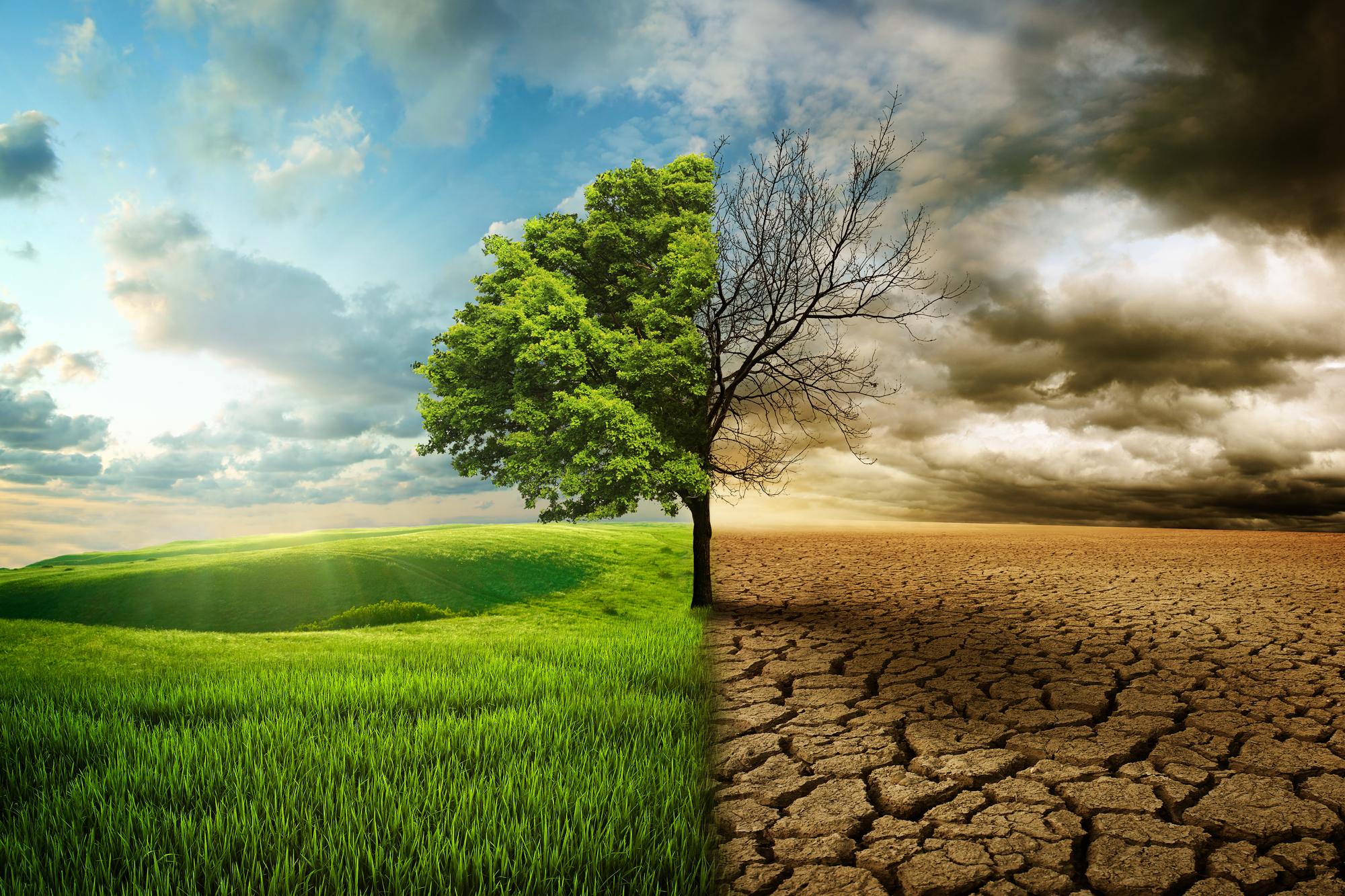
Today is our last Sunday of the Creation Season. While we include a prayer for creation every Sunday, over the past month, we have been creation centered – focusing all our intercessions on behalf of the earth, the animals, and the people suffering from environmental destruction. We have also changed the confession – naming our neglect of creation, our failure to care for the earth, and asking for forgiveness and a chance to amend our ways.
This was our first year joining the larger church – Episcopal/Anglican, Roman Catholic, Eastern Orthodox, and a host of protestant denominations, in this intentional reminder of what God has entrusted to our care, our failure to live into that call, and our renewed commitment to change for the sake of all creation. And today, on this final Sunday of this Creation Season, I cannot think of a better scripture for us to hear than something from the prophet Joel.
Now, I don’t know if you remember what you heard in the first reading, but when it was being read, it likely…or perhaps I hope…sounded familiar to you. For those who attend one of the High Holy Days of the church, the Feast of Pentecost, part of what you heard today comes out of the mouth of St. Peter, which is written in the Acts of the Apostles, where we get the story of Pentecost.
But the book of the prophet Joel tells a greater story in its short 3 chapters, and we got a bit more of it this morning. The part we get today is the response of God to verses earlier in this prophet’s work. The land had been ravaged by locusts, and all of creation was suffering. Joel called the people to true repentance – not showy piety, but a rendering of the heart. God then felt compassion for them, and pours down rain to produce abundant harvests from this locust plagued land, so that all will eat and be filled. And then the bit we hear on Pentecost: God said “I will pour out my spirit on all flesh; your sons and your daughters shall prophesy, your old men shall dream dreams, and your young men shall see visions. Even on the male and female slaves, in those days, I will pour out my spirit.” Note that prophesy bit – women included in the preaching of the word of God. Somehow the church forgot all about this for a very long time.
Anyway, the problem with taking scripture literally and out of context, which those who use the bible to promote sexism, to deny LGBTQ+ people their rights, or even at one time, to support the existence of slavery, often do, is that you can miss the truth that God wants us to hear. This is true for this passage from Joel.
On its surface, the text we heard today is very human centric. But, in the verses just prior to this, God first promises deliverance to the soil and the animals. Yup. Before having compassion on humanity, God says “Do not fear, O soil; be glad and rejoice, for the LORD has done great things! Do not fear, you animals of the field, for the pastures of the wilderness are green; the tree bears fruit, the fig tree and vine give their full yield.” So, God provides restoration to the first things God created and loved – the earth and all its non-human inhabitants. THEN God restores humanity. It is a mirroring of the creation story itself.
As we tend to do, we place ourselves in the center of God’s beloved community – as the focus of God’s love – as the be all end all of God’s universe. God, on the other hand, does not. What does that say to us about what we have done to the earth and to the animals that dwell here with us?
It is a question we must ask ourselves, because humanity throughout history have been the proverbial locusts who have ravaged the earth – killing vegetation, animals, and people along the way. We have polluted the sea, the sky, and the earth. We have destroyed animal habitats and pushed many species out of existence. We have prioritized our greed and insatiable desire for instant gratification at a low cost over our responsibility to God and to all of creation. And even when efforts are made to repent an do something about it, we whine and complain about the inconvenience of things like reuseable grocery bags and having to recycle.
And that is why we need to hear from the book of Joel, because this prophet offers a gift to us in these troubling times – a way forward in our repentance from what we have done, or failed to do, to care for creation.
First, Joel calls humanity to true repentance of our sins against God in our acts against God’s creation. This is why Creation Season is a good start, but cannot be all that we do. Yes, we must pray and ask God to forgive us. But take a moment now and pull out that prayer book in the pews. Open it to page 447. There you will find the liturgy for the confession, which is called Reconciliation of a Penitent – meaning of one who confesses. Reconciliation requires not only an admission of what we have done, but a promise to restore the damage we have caused. So while we lament the damage, and confess our complicity in it, we have work yet to do. Because as the prophet makes clear in the verses that follow what we heard today, God does not do this restoration alone – but calls upon the people to do their part. And so we are given an opportunity to partner with God in the restoration of creation.
So, we must move from this time of focus on creation toward mission in the world. What will that look like here at Christ Church? How can we, together with Christ, work to renew creation within our community? I ask you to consider if God is calling you to lead this parish in an intentional act of reconciliation – of ecological renewal – as part of your stewardship in the church. And if so, seek out one of our leadership, or me, to talk about this call.
We must also ask what our reconciliation will look like in the world? For while we here in the US, since the 1990s, had been a part of a global effort to reduce the impact of humanity on climate, the current leadership in Washington has pulled us out of those initiatives, and far worse. This administration has rolled back environmental protections that will result in sickness and death for people near coal mines and power plants, called for the increase in the production of fossil fuels while removing incentives for green energy use, and is opening national parks and nature preserves for destructive drilling and mining. The reason – to increase profits of businesses – prioritizing greed over the health, safety, and viability of God’s creation – human, earth, and animal.
Lordy! The locusts have nothing on these guys.
So there is much reconciliation work to be done, and it can seem overwhelming – which is probably what the people were feeling in the book of Joel. But the prophet reminds us that, while we have failed God, all is not lost. Hope is rooted in our willingness to truly return our hearts to God and ask for forgiveness and a chance to change.
Hope is found in the ability to envision what may be – to dream dreams.
Hope is made manifest in our willingness to take those dreams and prophesy about them – to preach it in word and in deed.
And because we have not yet gotten to a place of total desolation, hope is seen in the green of the trees and the grass that return every spring, it is heard in the birds that sing and in the sound of water running along the riverbank, and it is felt in the freshness of the new fallen snow and an ocean breeze. All of which is a reminder to us of the goodness of God, and our call to be good stewards of God’s creation.
And stewardship itself is an act of hope.
Stewardship is an act of hope – because you do not care for something if you see no future for it, or use of it. Stewardship, by its very purpose, is an investment in the dream, a step toward the vision, a promise of today on behalf of tomorrow.
And there was one woman who understood this more than most. Her name was Wangari Maathai. Her life work would take a long time to tell you, but I will try to give you at least a glimpse into the life of this remarkable woman.
Wangari Maathai was born in the rural central highlands of Kenya. In 1960, she was among 300 young Kenyans selected to participate in the “Kennedy Airlift,” a scholarship program that provided promising African students with an education in the United States, where she earned her PhD in veterinary anatomy.
The willingness of our country to be good stewards of all God’s children, not just those within our borders, was a seed we planted in the life of Wangari Maathai. But it was her dream, her vision, that propelled her to prophesy in word and in acts to change what was to what could be. She saw in her Roman Catholic faith and the traditional spiritual beliefs of her Kikuyu ancestors, the sacredness of nature and the need to treat it with respect as stewards of creation.
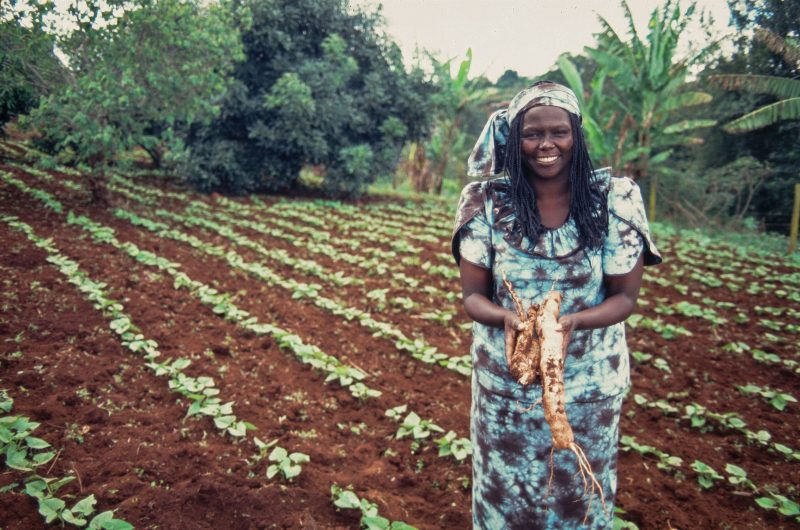 After returning to Kenya, Maathai recognized a dual need in her country – to do something about the deforestation that was devastating the land and in doing so, lift up women who were suffering the effects from it. After the non-profit she founded, Envirocare, was gifted 6,000 tree seeds, Maathai went to work. She formed the Greenbelt Movement, and worked to distribute seeds to women to plant, teaching them how to nurture the seedling.
From that small start, she sought to ensure that those trees would generate income for the women who planted them, giving them ownership of them and the products that came from them. This was transformative, as women were not traditionally given ownership of the land they farmed. But she didn’t just hand them a seed and leave. She made sure the women knew how to care for the seeds, and how to market what grew from them. She taught professional forestry techniques, which resulted in job opportunities as educators, tree nursery managers, and rangers.
It wasn’t all easy for her, to be sure. After leaving her university position (and the housing that came with it) to run for parliament, she lost the election. Homeless and jobless, she did not give up the dreams and visions she had for a greener world. She continued her activism on behalf of the environment, women, and others who are oppressed, once having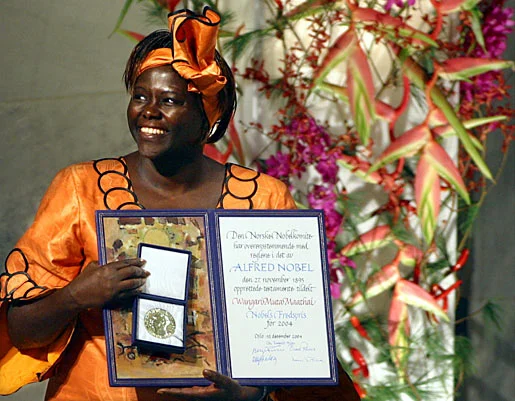 to hide for fear of her life, and on another occasion being hit in the head with a canister of tear gas that knocked her unconscious. She was not deterred. Among the many recognitions of her life work, Wangari Maathai was awarded the Nobel Peace Prize in 2004, the first African woman to be recognized with this honor.
From this one woman, with her faith and some seeds, an entire movement was born, and the lives of so many were changed for the good. This is how stewardship quite literally takes root – with one small seed of hope, which when planted will change the world, and no amount of proverbial locusts can do anything to stop it.
That is the transformative power of hope.
That is the transformative power of stewardship.
With that in mind, while this is Creation Season, it is also Stewardship Season, when we consider how we will plant seeds of hope for the betterment of the world in the name of Christ. And something Maathai said about her beloved trees reminds me of our parish. She said, “A tree has roots in the soil yet reaches to the sky. It tells us that in order to aspire we need to be grounded and that no matter how high we go it is from our roots that we draw sustenance.” Christ Church is our tree – a place where we can feel grounded in community, rooted in the knowledge of the love of Jesus for us, and given sustenance for the work we are called to do in his name.
So, as we do here, you will be given a gift, blessed at the altar. Today it is a small wooden leaf – the perfect size to put into your pocket or hold in your hand as you pray. As you look at it in the days and weeks ahead, let it remind you of our call to care for creation.
Let it remind you of this place, your spiritual tree, where you are able to reconcile your relationship with God, and from here, live a more intentional and hope filled life of purpose.
Let it remind you of the abundance in your life, no matter how small it may seem compared to others, and the way that even the smallest seeds – given to others, as Wangari Maathai did for so many – can spread hope far and wide.
And after the service, grab a few more of those leaves and give them out to others. Invite them into a conversation about environmental stewardship. Share with them your dreams and visions for a better world rooted in your faith, and listen to theirs.
The prophet Joel calls us into true repentance for what we have done. God’s response is compassion and overwhelming grace, a rain of hope from which we are able to dream of what is possible.
So let us consider what vision for God’s creation dwell in our hearts, and how we, as stewards of creation, will sow the seed of hope to live into them, bringing all the world one step closer to the dream of God – that beloved community of peace, wholeness, mercy, and love – where not only humanity will thrive, but all of creation that God loves so very much.
Amen.
For the audio, click below, or subscribe to our iTunes Sermon Podcast by clicking here (also available on Audible):
The Rev. Diana L. Wilcox
Christ Church in Bloomfield & Glen Ridge
October 26, 2025
Pentecost 23 – Year C
1st Reading – Joel 2:23-32
Psalm 65
2nd Reading – 2 Timothy 4:6-8,16-18
Gospel – Luke 18:9-14